Customer story Medical devices Maple Grove, Minnesota
Illustrative sample: the company, people and figures are representative, not an actual named customer.
Lindqvist Medical cut prototype turnaround from eight days to overnight.
A Maple Grove catheter-handle maker brought fixture and test-part printing in-house. Its engineers now run four design iterations a week instead of one every two, and reach first article five weeks sooner.
- 8 business days Overnight Prototype turnaround, CAD release to parts in hand
- 4/wk Design iterations, up from one every two weeks
- 81% Less outsourced prototype and fixture spend
- 5wks Sooner to first article, 11 weeks down to 6
At a glance
- Company
- Lindqvist Medical (illustrative)
- Location
- Maple Grove, Minnesota
- Makes
- Deflectable catheter handles and steerable sheaths for cardiovascular device companies
- Size
- About 160 people; 14 in product development and manufacturing engineering
- Put in
- One industrial FDM printer, 3D design software seats, onboarding and fixture design training
01 · The problem
Designing around the shipping schedule
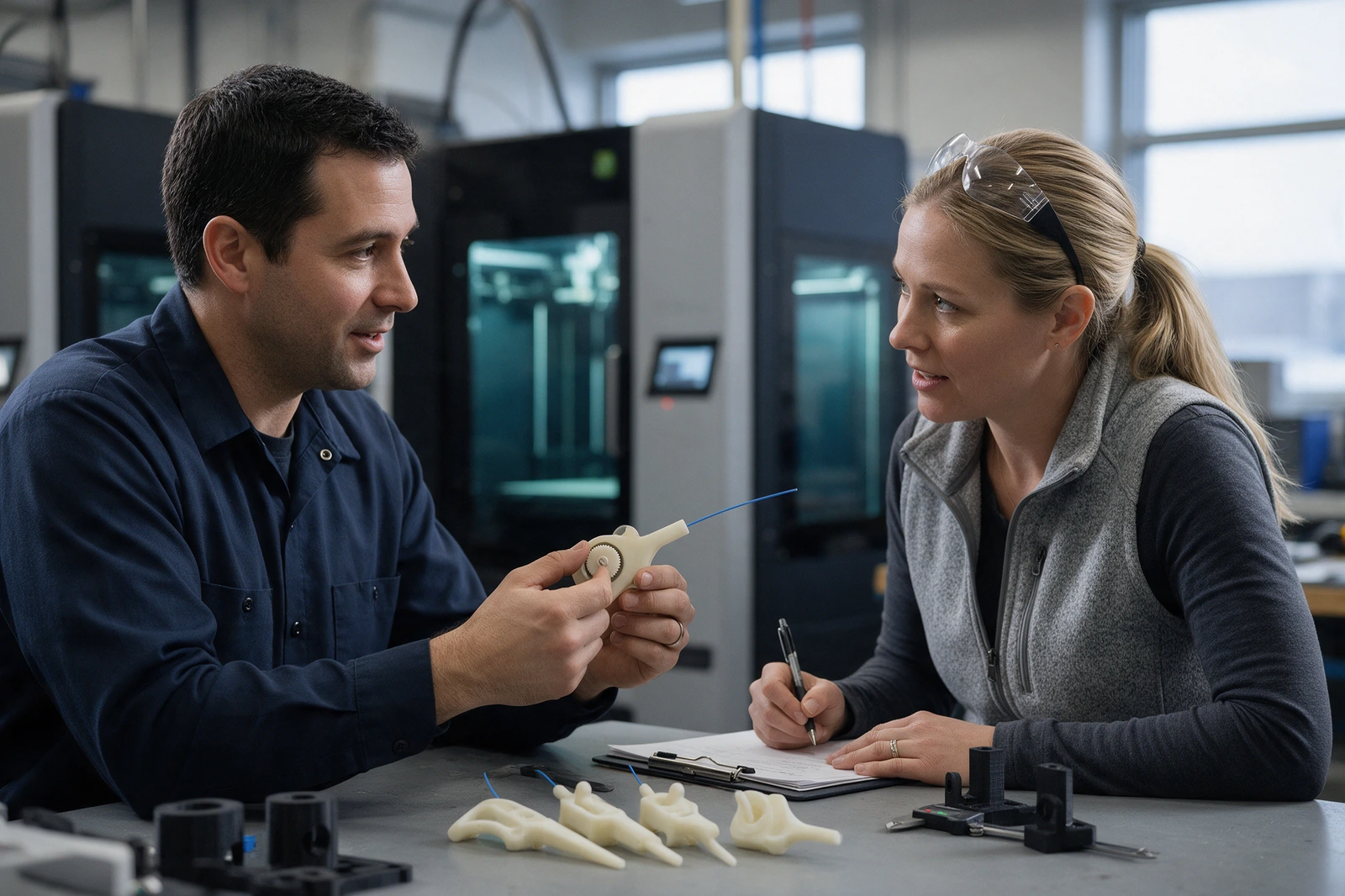
A catheter handle lives or dies at the design review. Karin Aasen's team brings a customer's physicians a handle to hold, they turn the thumbwheel, feel the detent, squeeze the housing, and say what's wrong. Then the team fixes it and does it again. The number of times you can do that before design freeze is the quality of the product.
At Lindqvist, that loop ran through a service bureau and a machine shop. A revised set of housing halves took eight business days from CAD release to parts on the bench: a day or two to quote, the build, finishing, shipping to Maple Grove. Each round cost about $2,400. On an active program the team managed one iteration every two weeks.
The fixtures were slower. Every new handle needs its own drill guide for the flush port, its own assembly nests for the cleanroom, its own check gauges for incoming molded parts. Machined outside, a fixture averaged $1,800 and three weeks. When a design changed late, the fixtures changed with it, and the pilot line waited. From design freeze to first-article inspection took eleven weeks.
“We were designing around the shipping schedule. If a review was on Thursday, the CAD had to be done the Thursday before. Whatever we learned in between waited for the next round.”
In 2024 Lindqvist spent $212,000 on outsourced prototypes and fixtures. The money hurt less than the calendar.
02
What we put in
scoped the work with Karin's and Luis's teams in the summer of 2025 and installed in October.
-
The printer
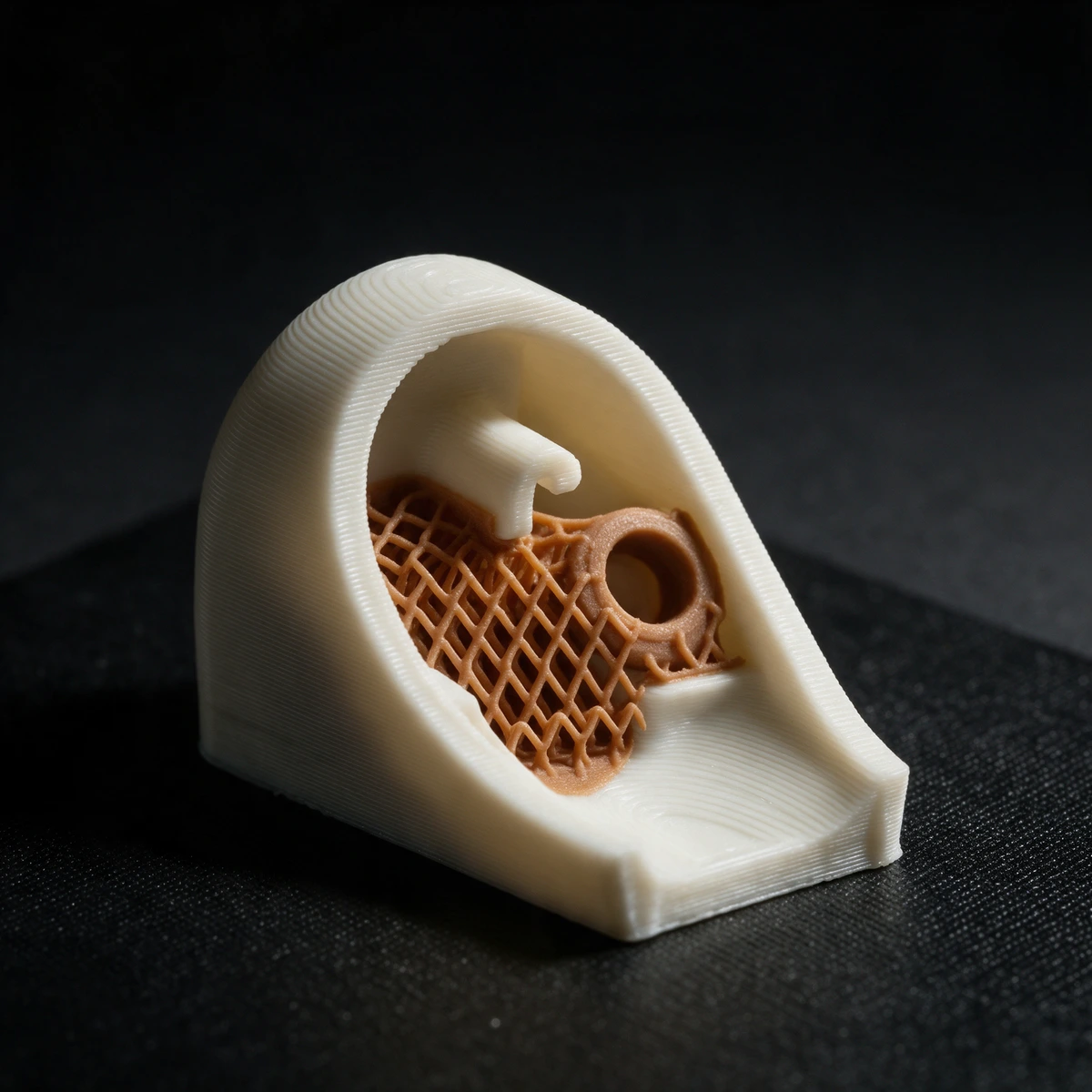
One industrial FDM printer: a heated build chamber, soluble support so snap-fit pockets and internal channels come out clean, and dimensional accuracy in the range of ±0.127 mm (±0.005 in) on a part this size. A build envelope large enough to nest a full set of housing halves, a thumbwheel and two fixtures in one overnight job.
-
Engineering-grade materials, matched to the job
- Polycarbonate
- for drill guides and check fixtures: stiff, tough, holds a pressed-in steel drill bushing.
- Carbon-fiber-filled nylon 12
- for cleanroom assembly nests: rigid, light, wipes down with isopropyl alcohol.
- ESD-safe ABS
- for fixtures that touch the handle's electrode wiring.
- Medical-grade ABS
- for housing test parts, a material grade rated to ISO 10993 and USP Class VI, chosen so bench parts behave close to the molded plastics they stand in for.
-
The design software
3D design software: added seats for the engineering group, with print preparation inside the same workflow. Engineers model a fixture directly off the device CAD, subtracting the part to form the nest, and send it to the printer queue without leaving the model.
-
Onboarding that fit a regulated shop
Two days of install and operator training, a one-day fixture design workshop with Luis's team, a material selection session with Tessa and quality, and an applications engineer on call. A 30-day check-in tuned build orientation for the snap-fits.
“They didn't hand us a printer and leave. They sat with my team and redesigned three of our worst fixtures in the first week, and we had them on the line by Friday.”
03
How the team works now
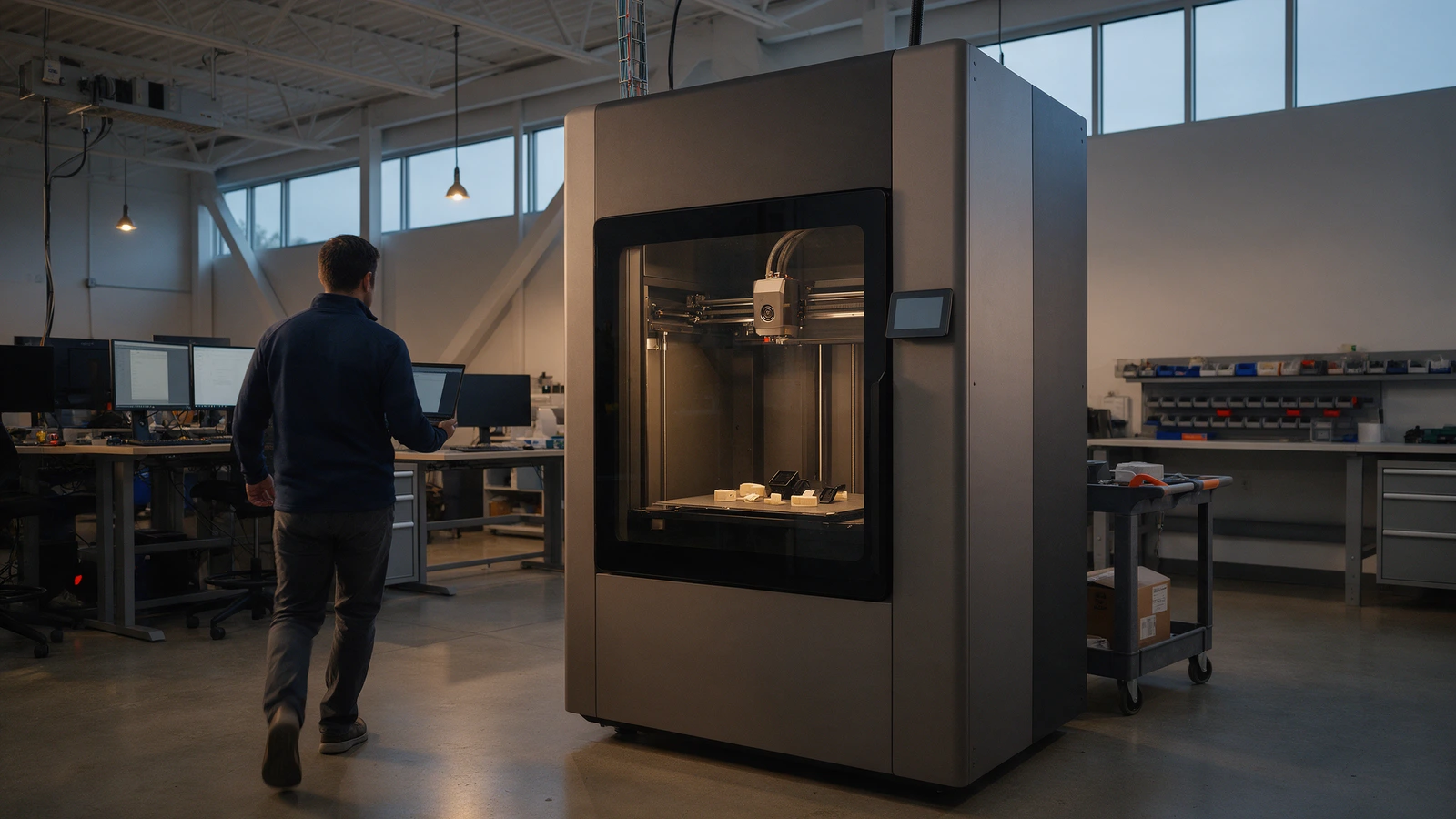
The printer sits on the engineering floor, twenty steps from the CAD stations. The day ends with a queue.
Test parts, overnight.
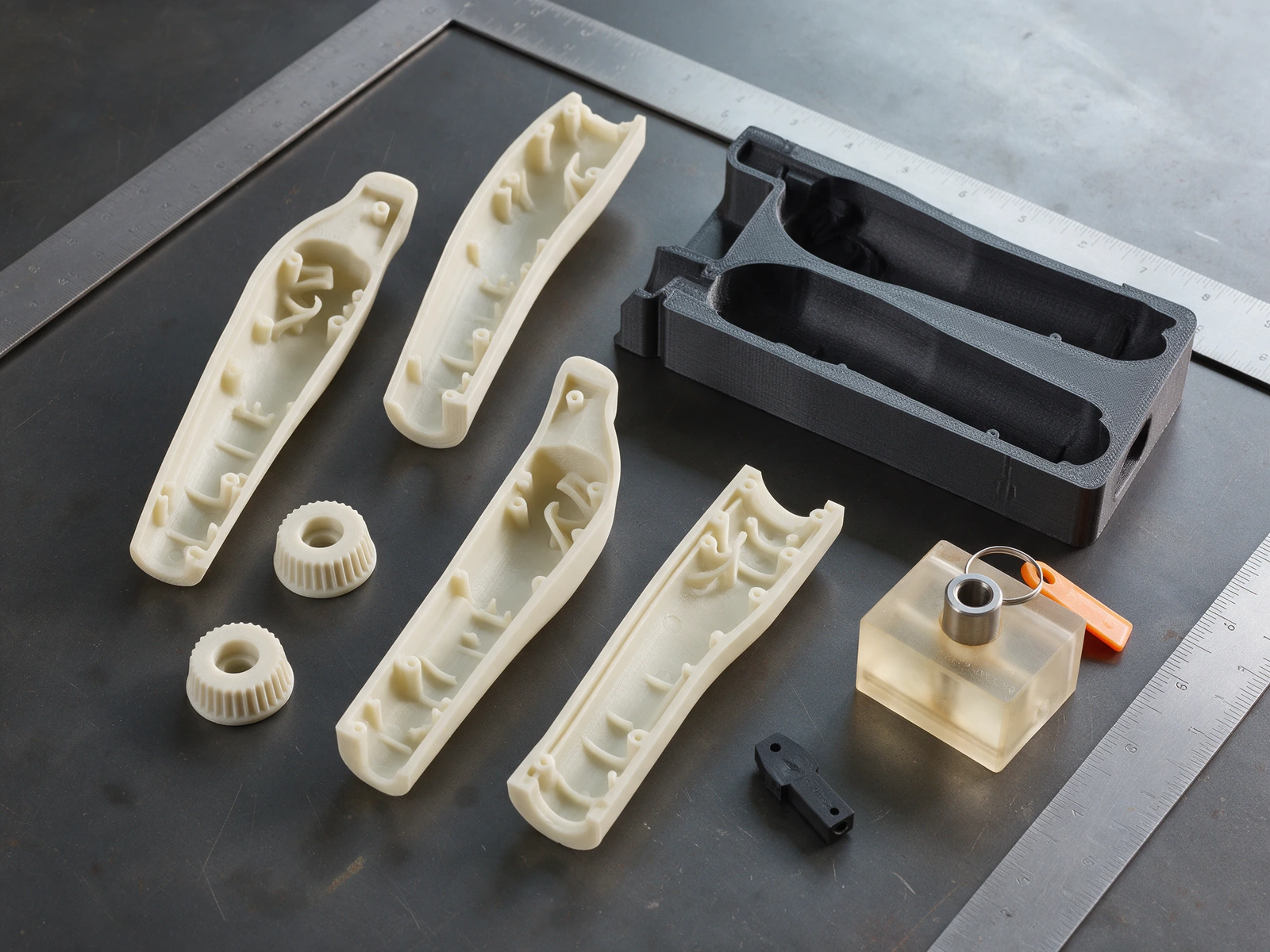
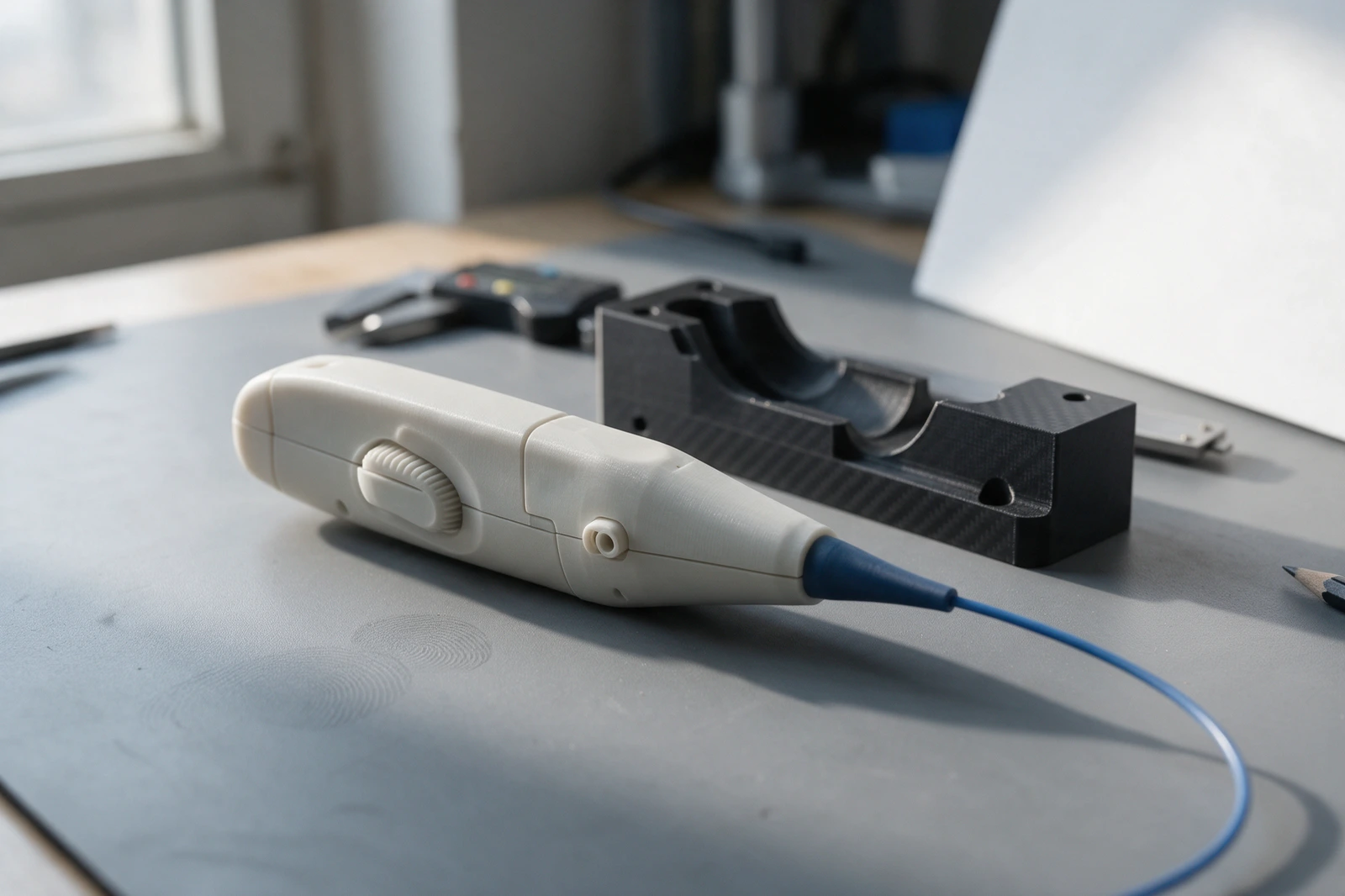
An engineer releases a housing revision by 4 p.m.; the build runs overnight; the soluble support dissolves in the morning wash. By midday the halves are snapped together on the bench with the real shaft, pull wires and thumbwheel. Snap-fit cantilevers are oriented so the beam flexes along the layers, not across them, and the team tunes beam thickness and undercut in quarter-millimeter steps, three variants in one build. Printed housings are a proxy, and the team treats them as one: they settle form, fit, ergonomics and mechanism on printed parts, then confirm the final snap-fit forces on molded parts from soft tooling.
Fixtures, on the same night.
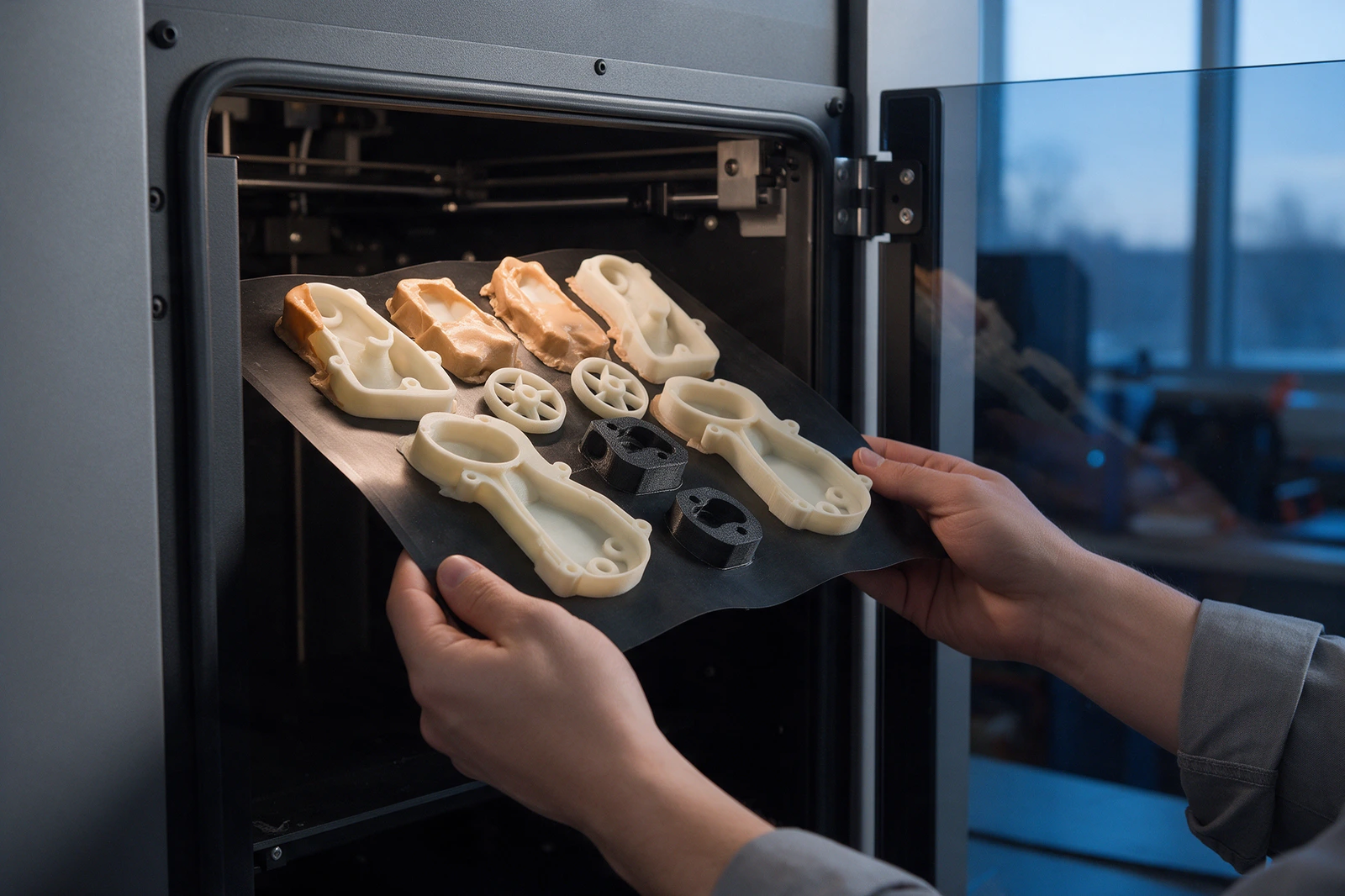
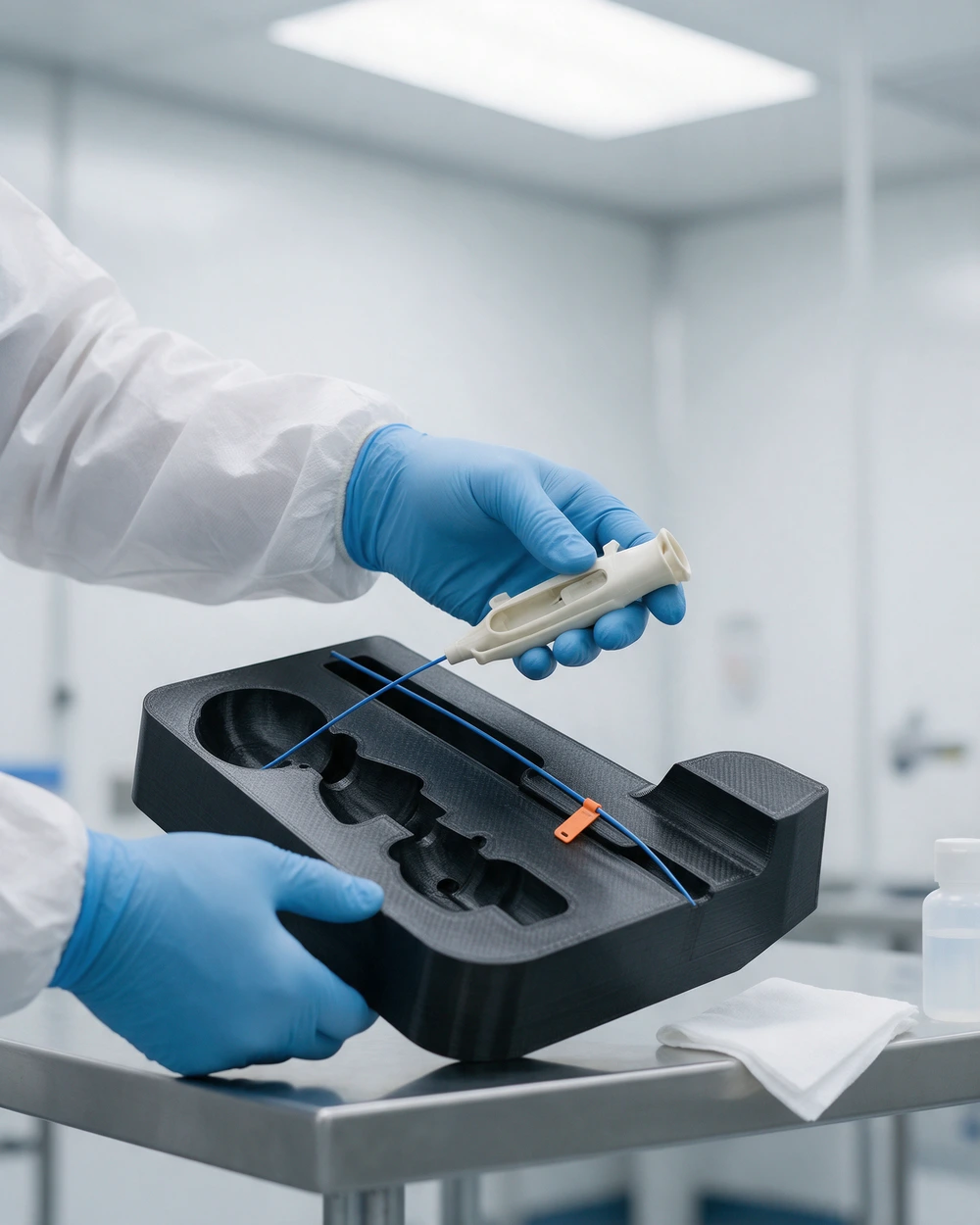
The fixtures that used to come from a machine shop now come out of the same build as the parts they hold:
- Drill guide for cross-drilling the flush port in a molded housing half. Printed in polycarbonate, with a steel bushing pressed in for the bit.
- Assembly nest that aligns the two housing halves and holds the shaft straight while the strain relief bonds in the cleanroom. Carbon-fiber nylon.
- Pull-wire tensioning jig that sets wire tension before the thumbwheel is captured. ESD-safe ABS.
- Go/no-go check fixture for incoming molded halves, and a CMM holding fixture that locates the housing for first-article inspection.
- Deflection test rig with a printed protractor plate that measures tip deflection angle across 500 actuation cycles.
Quality, written in.
Tessa's team qualifies every printed fixture the same way they qualified the machined ones: a drawing, an inspection against it, an ID tag and a record. A revised fixture goes through the same check, just days sooner.
“A printed fixture still gets inspected, tagged and recorded. The paperwork didn't get shorter. The wait did.”
What stayed outside.
Metal components, tight-tolerance machined parts and production tooling still go to Lindqvist's machine shops and molders. The printer took the work that was waiting, not the work that needed a lathe.
04
The results
Measured over the first twelve months after install.
Illustrative figures for a representative 14-person engineering group, measured over 12 months.
- Prototype turnaround: from eight business days to overnight.
- Iterations: from one every two weeks to four a week. On the flagship bidirectional sheath handle, the team ran 23 handle iterations in nine weeks. The original plan budgeted five.
- Cost per iteration: from $2,400 to $180.
- Fixtures: from three weeks and $1,800 to one or two days and $90 in material. 140 printed fixtures and gauges went into use in the first year.
- Outsourced spend: from $212,000 to $41,000 a year, down 81%. Payback in about 18 months on avoided outsourcing alone.
- Time to first article: from eleven weeks to six. Fixtures are now ready before the first molded parts arrive, so the pilot line starts the day they do.
“We were designing around the shipping schedule. Now we design around the problem.”
“The fixture used to be the thing we waited for. Now it's printed the night the design freezes.”
Talk to  about your prototype loop.
This is a sample page. When it goes live under your name, this button opens your contact page or calendar.