On this page
What it actually covers
A car policy is a bundle of separate coverages. You choose most of them. Here's each one in plain words.
Liability (required in Oklahoma)
If you cause a wreck, this pays for the other people's injuries and the other people's car or property. It does not pay for you or your car.
Oklahoma's minimum is written as 25/50/25
- up to $25,000 for one injured person,
- up to $50,000 for everyone injured in one accident,
- up to $25,000 for damage to other people's property.
Source: Oklahoma Insurance Department. Those are legal minimums, not a price.
If the damage you cause is bigger than your limits, the rest can be on you. The Oklahoma Insurance Department notes that a common industry recommendation is 100/300/100. We'll talk through what makes sense for what you own and what you earn.
Collision
Pays to fix your own car after you hit something: another car, a pole, the curb on Riverside you didn't see. Optional by law. If you have a car loan or lease, your lender almost always requires it.
Comprehensive (sometimes called "other than collision")
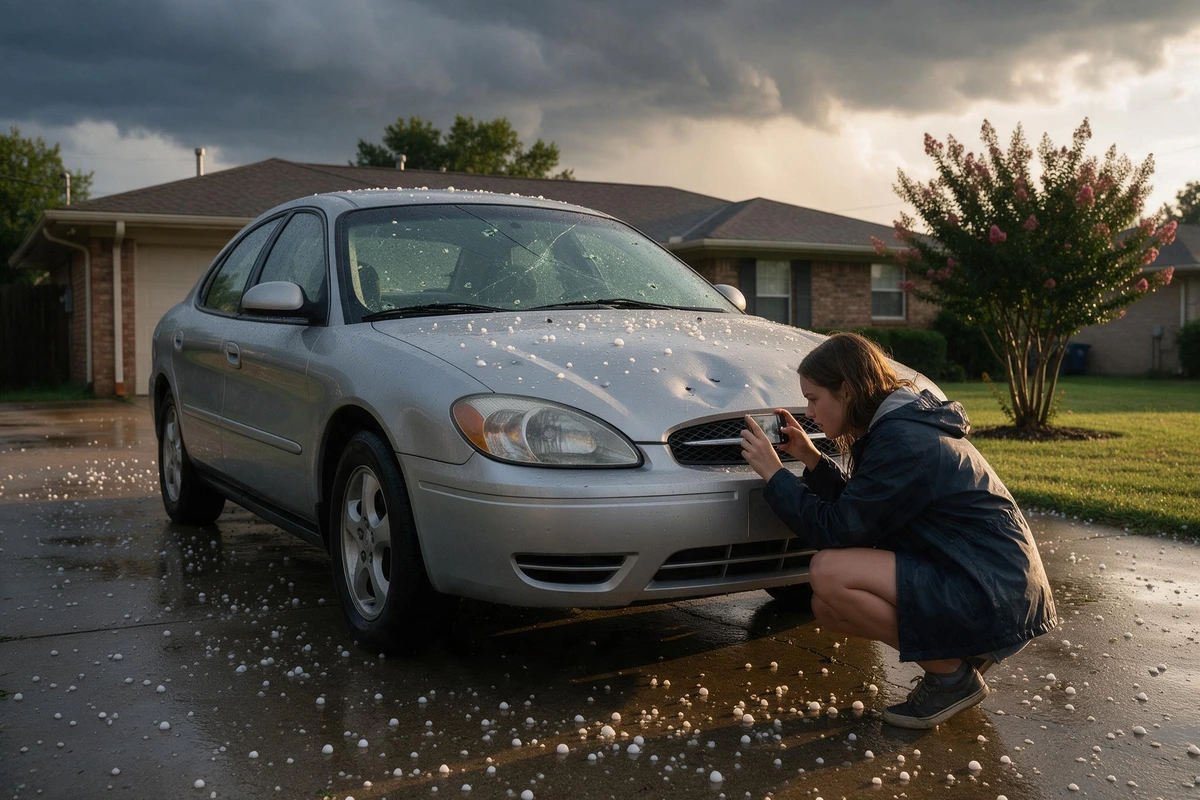
Pays for damage to your car that isn't a crash: hail, a falling tree limb, fire, flood, theft, vandalism, hitting a deer. In Oklahoma, this is the hail coverage. Also optional by law, also usually required by a lender.
Uninsured and underinsured motorist
Pays for your injuries (and depending on the policy, your car) when the driver who hit you has no insurance, or not enough. Not every driver on I-44 is insured. Oklahoma insurers have to offer you this coverage. We almost always talk about it.
Medical payments
Helps pay medical bills for you and your passengers after a wreck, no matter who caused it.
Rental reimbursement and roadside help
Small add-ons. One pays for a rental while your car is in the shop. The other sends a tow truck when you're stuck on the Broken Arrow Expressway at 7 a.m.
"Full coverage" isn't a real thing
People say "full coverage" to mean liability plus collision plus comprehensive. It's a useful shorthand, but no policy covers everything. Ask what's actually on your declarations page. We'll go through it with you line by line.
The Oklahoma part
Hail is a car problem too.
A spring hailstorm can leave a parking lot of dented roofs and cracked windshields in minutes. That damage falls under comprehensive. If you only carry liability, hail damage to your own car is yours to pay.
Ice and trees.
When an ice storm brings limbs down on parked cars, that's comprehensive again.
Deer.
Drive Highway 75 or the turnpikes at dusk in the fall and you'll see why we mention it. Hitting a deer is usually comprehensive, not collision.
Lending your car.
In Oklahoma, the car owner's coverage generally follows the car when you give someone permission to drive it. Lend carefully, and tell us about anyone who drives your car regularly.
What a deductible is (the kitchen-table version)
Your deductible is the part of a repair you pay before your insurance pays the rest. Collision and comprehensive each have their own deductible. Liability doesn't have one, because it pays other people.
Illustrative example
Hail does $4,200 of damage to your car. Your comprehensive deductible is $500. You pay the first $500; your insurance company pays $3,700.
Another
You back into a pole in a Brookside parking lot. $1,800 of damage. Your collision deductible is $1,000. You pay $1,000; insurance pays $800. Some people decide a small claim like that isn't worth filing. We'll help you think it through.
All figures are illustrative teaching examples, not prices or coverage recommendations.
How to choose one: pick a number you could pay on a bad Tuesday without panic. Too high and a claim hurts. Tell us what feels right and we'll show you how each company handles it.
Why an independent agent helps with auto insurance
Every insurance company weighs drivers differently. One company looks hard at a speeding ticket from three years ago. Another cares more about where the car is parked or how far you drive. A new driver, a teen on the policy, a car used for deliveries: each company has its own view.
An app shows you one company's view. We compare 14 (illustrative) and show you the differences side by side, in plain words. If your situation changes, like a new teen driver, a move from Midtown to Jenks, or a side gig delivering food, we look again.
About that side gig: a personal auto policy often doesn't cover you while you're driving for pay. If you deliver food or drive for a rideshare app, tell us before something happens, not after.
When something goes wrong
At the scene
- Get safe. Move out of traffic if you can. Hazards on.
- Call 911 if anyone's hurt, or if the police need to be there.
- Trade information: names, phone numbers, insurance companies, policy numbers, plate numbers. Take a photo of their insurance card.
- Take pictures: both cars, the plates, the street, any skid marks, the weather.
- Don't argue about fault. Be kind. Let the insurance companies sort it out.
- Call or text us: (918) 555-0158.
After hail or a tree on a parked car
Take photos, note the date, and call us. If the windshield is cracked, ask before you get it fixed. Glass is handled differently by different companies.
What happens next
Your insurance company assigns an adjuster, who looks at the damage and writes an estimate. You can usually choose your own repair shop. If something about the estimate or the timeline feels off, we'll help you ask.
Questions people ask us
I'm 25 and just bought my first car. Where do I start?
Start with what you owe on it. If there's a loan, your lender will require collision and comprehensive. Then talk with us about liability limits and uninsured motorist coverage. Fifteen minutes, usually.
Can I stay on my parents' policy?
Sometimes, if you live at the same address. Once you move out or buy your own car, it usually needs its own policy. Every company has its own rules.
Does the color of my car matter?
No. The Oklahoma Insurance Department says so directly. The make, the model and the driver matter. The paint doesn't.
Do I need to keep proof of insurance in the car?
Yes. Oklahoma requires proof of insurance. Keep it in the glovebox or wherever your company's card lives.
New car, new driver, or just not sure what you have?
Tell us what you drive and who drives it. A person replies.
Sample work. Heartland & Vine Insurance is an illustrative agency. People, numbers and stories are invented; Tulsa and Oklahoma places are real. Oklahoma liability minimums and the comprehensive-coverage facts come from the Oklahoma Insurance Department's "Auto Insurance: Common Myths" page (oid.ok.gov). Nothing here is a quote, a price or an offer of insurance.